Can you believe it has been more than a decade since Ring introduced the world’s first doorbell camera? Known as video doorbells back in the day, Ring’s revolutionary device changed the way Americans thought about both home security and package delivery. But 13 years later, there is a lingering question: is a doorbell cam worthwhile as a standalone security device?
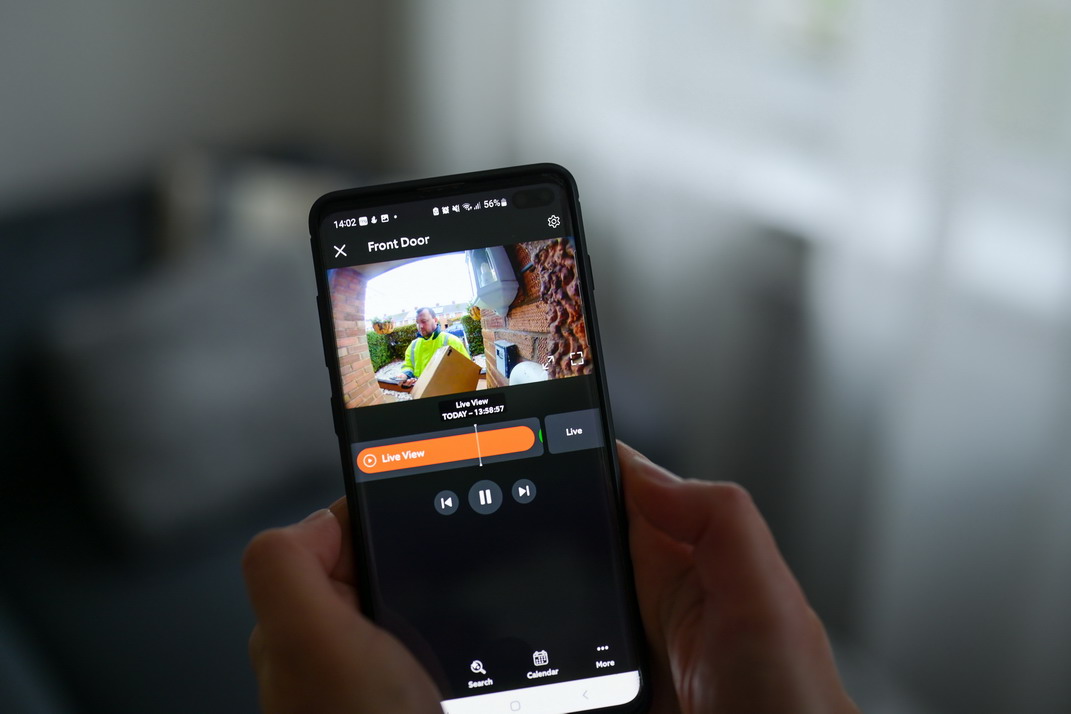 My question is borne out of the reality that some homeowners want to invest in home security but simply cannot afford the price of a full system with monthly monitoring. If they are left to choose between one or two standalone devices that their budgets will support, perhaps a doorbell cam is a good option. Maybe it’s not. A homeowner would have to look at the proposition from every angle.
Doorbell Cam Basics
Vivint, a nationwide leader in monitored home security, includes doorbell cams in its inventory of security devices. They say that the basic premise of a doorbell cam is simple enough to understand.
A doorbell cam is a device that combines traditional doorbell technology with modern wireless video surveillance. Some units are hard-wired to a home’s electrical system using the same low-voltage wiring a traditional doorbell operates on. Other doorbell cams are battery-powered units.
The doorbell function is pretty standard. A wired unit sends signals to the existing chime. A wireless unit sends signals to one or more devices via the home’s wireless network. A homeowner hears the chime and/or sees a notification on a cell phone, computer, or smart TV.
As for the camera function, it works the same way as an independent wireless camera. Basic models record video footage and store it locally. More advanced models both record data and stream in real time. Homeowners can get doorbell cams with high-end features including motion activation, night vision, and onboard audio.
The Onboard Audio Function
For my money, a doorbell cam is not worth the investment if it doesn’t have onboard audio capabilities. Such capabilities allow homeowners to actually communicate with visitors through the doorbell unit itself. No one ever needs to open the door. And if the homeowner isn’t even home, the visitor doesn’t need to know that.
Onboard audio capabilities give homeowners an edge in terms of burglary protection. Even package thieves can be caught off guard and deterred when a homeowner responds quickly enough to cell phone alerts.
Imagine being a burglar preparing to enter a home through the front door. You ring the doorbell to see if anyone is home, only to be greeted by the homeowner’s voice. You don’t know where the homeowner is. Is she home? Is she away at work? Is she thousands of miles away on vacation?
In the end, it doesn’t matter. The homeowner is now aware that you are standing at the front door. Should you proceed to go further, your chances of getting caught are extremely high. If you are like most burglars, you will make up an excuse and quickly leave the property.
As a Standalone Device
Companies like Vivint, which specialize in whole-home security systems with professional installation, do not tend to sell doorbell cams as standalone devices. But consumers can find individual doorbell cams at home improvement stores, department stores, electronic stores, and online. They are pretty much a-dime-a-dozen in terms of the number of choices consumers have.
The first question of value lies in a product’s price. A recent Consumer Reports review of the best wireless doorbell cams for 2026 noted the retail price of the least expensive model at $49.99. A customer would have to pay an additional $7.99 for advanced features and remote data storage. Incidentally, the most expensive model reviewed by Consumer Reports costs nearly $130.
A $50 price tag for a basic doorbell cam does not seem unreasonable if you are really just interested in recording video footage and storing it. But what if you want access to onboard audio and around-the-clock streaming? Plan to spend a little bit more.
The other side of the coin – the doorbell cam with the asking price of $130 – is hard to justify as a standalone device. You get all the bells and whistles for that price. But you would likely spend less on a comparable camera if you purchased it as part of a complete home security system.
More Value for Your Money
To me, the idea of a particular device being worthwhile boils down to value for money. In other words, are you getting enough for the price you paid to justify spending that amount? It seems to me that there is more value in a whole-home security system that includes a variety of cameras, door and window sensors, smoke and carbon monoxide sensors, and around-the-clock monitoring.
Yes, the total retail cost of a whole-home system can be significant. You could pay three times as much for a complete system as you would for a top-of-the-line doorbell cam. If a homeowner’s budget cannot support a whole-home system, fine. But if it can, spending so much on a standalone doorbell cam does not seem to make sense.
Multiple Layers of Defense
The best value in a home security system lies in multiple layers of defense. A single doorbell cam is certainly better than nothing at all. But it will not be as effective as an entire system complete with remote monitoring. The more layers built into a home security system, the more effective it is as a means of protection.
Are you considering investing in a doorbell cam? If so, start with a number. Figure out what your budget will support and then go from there. The idea is to get the most for your money regardless of how you choose to proceed.
You may decide that a standalone doorbell cam is worth the investment. Look for a model that gives you everything you want for the amount you can afford to spend. But if you decide that a standalone device is not worth the cost, you can start looking at whole-home systems instead.